
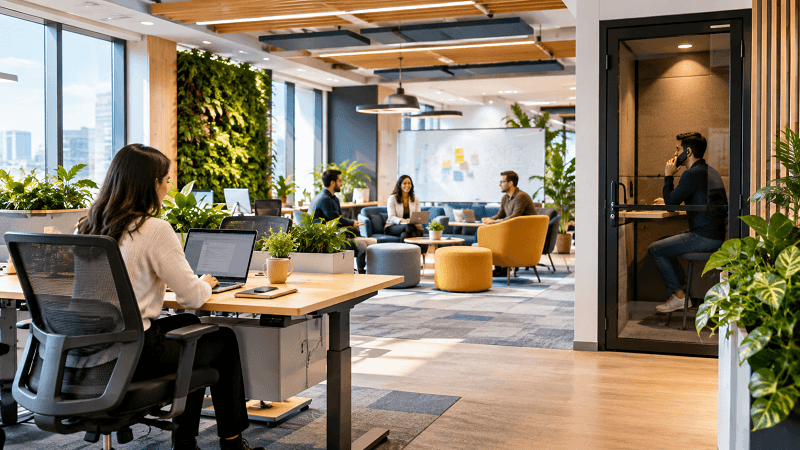
Long gone are offices filled with individual cubicles. Where once there was row after row of employees sitting quietly at their bland workstations, we now have open, airy spaces designed to improve creativity and encourage collaboration.
We might be a long way from Robert Propst’s creation. But how do we create an environment that our teams will flourish in?
Prioritize employee wellbeing and comfort
At the top of the list is ensuring your staff are comfortable. If they’re sitting awkwardly for long periods of the day, this can affect their wellbeing and distract them from the task they need to focus on.
Start by looking at the furniture. Invest in high-grade ergonomic chairs with adjustable lumbar support and dynamic tension controls. This prevents the back pain and fatigue that can derail productivity. Pair these chairs with sit-stand desks, to allow employees to shift positions every hour. By encouraging them to move around, they can maintain healthy blood circulation.
Lighting and air quality equally dictate how your team feels by 3pm. Replace harsh overhead fluorescent bulbs with warm, dimmable LED systems that mirror natural daylight cycles. Upgrade your facility’s air conditioning unit too. A well-ventilated space will keep everyone at an optimal temperature and a good filtration system will circulate clean air, keeping your workforce alert and reducing seasonal illness.
Create a balance between collaboration and focus
A modern office fails when it forces employees into a single mode of working. Open-plan layouts make it easier to engage in a quick brainstorming or planning session. However, constant exposure to other people’s conversations can be difficult if you’re trying to concentrate. Strike a balance by mapping out designated zones for distinct activities.
Establish collaborative lounges equipped with whiteboards, movable seating, and shared media displays where project teams host informal meetings. In addition to these collaborative hubs, add dedicated quiet zones. These can be small library-style rooms made from drywall panels, where the space is partitioned and phone calls and casual chats remain strictly off-limits.
By offering clear boundaries, you grant your team full autonomy over how and where they complete their daily goals.
Incorporate natural elements and flexible spaces
Being out in nature is known for being calming. By introducing biophilic design to indoor space, you add that sense of tranquility to your office.
Integrate these biophilic elements throughout your layout by installing living plant walls, positioning workstations close to exterior windows, and choosing natural wood finishes over industrial plastics.
Manage noise and environmental distractions
Noise levels are one of the single largest complaints in contemporary office life. Lots of distracting sounds can ruin concentration and elevate stress levels across entire departments.
Address this by mounting decorative acoustic felt baffles above high-traffic corridors to trap bouncing sound waves and replace hard flooring with sound-dampening carpet tiles in primary desk bays.
For essential private conversations and confidential client calls, install standalone acoustic phone booths throughout the floor plan. These targeted interventions keep the overarching office vibe energetic without letting ambient noise disrupt individual tasks.