
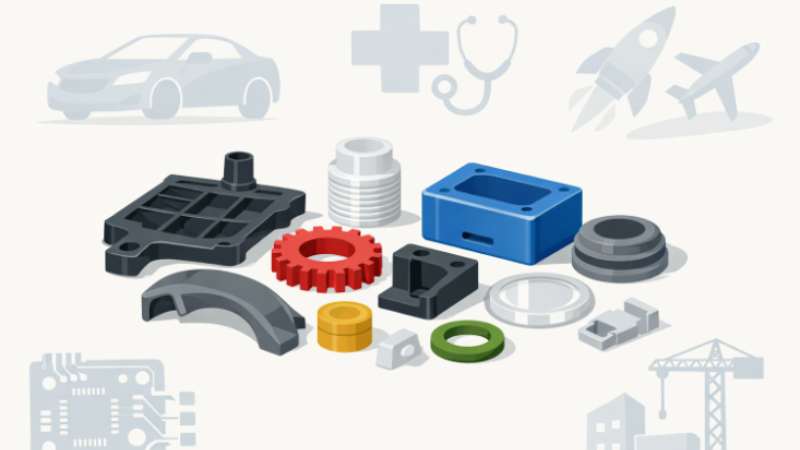
Custom plastic parts have fundamentally changed how products are designed and produced by enabling manufacturers to address detailed performance requirements without the high costs of traditional materials. This adaptability is why these parts are now a cornerstone of industries ranging from automotive to consumer electronics. For companies seeking reliable custom solutions, choosing the right partner is crucial. Learn more about specialized manufacturing options at https://npi-ks.com/services/custom-plastic-parts-manufacturer/.
As manufacturing moves towards increased efficiency and sustainability, plastics have proven essential for their lightweight properties and the ease with which they can be tailored for specific needs. Their use does more than cut material costs; it also opens new opportunities for design and function, which is why so many sectors are shifting toward plastic components over legacy alternatives.
This article examines the industries that rely on custom plastic parts, highlights advancements in manufacturing methods, and discusses how these components support sustainability goals and improved product performance.
From healthcare innovations to complex aerospace assemblies, the reach of custom plastic parts continues to grow, making them an innovation driver worth exploring in greater detail.
Automotive Industry
The automotive industry has embraced custom plastic parts to achieve ambitious goals in fuel efficiency and design innovation. Plastics are now a primary material for interior components, engine covers, electrical housings, and even exterior panels. For example, HP’s Multi Jet Fusion 3D printing technology demonstrated its capabilities by manufacturing over 75 unique parts for a customized vehicle, emphasizing the growing shift from metal to high-performance polymers in this sector. These lightweight components not only contribute to better mileage but also speed up vehicle assembly and reduce production costs. Learn more about this innovation at HP’s official announcement.
Medical Sector
The medical field relies heavily on custom plastic components to create biocompatible, sterile devices tailored precisely to patient-specific needs. Innovations in medical device manufacturing, such as advanced injection molding, make it possible to produce high-precision parts rapidly and in large volumes. These parts include everything from surgical instruments to diagnostic test housings and disposable syringes. The use of plastics also allows for components that meet rigorous standards for cleanliness and patient safety, which is crucial for compliance in healthcare environments.
Aerospace Applications
Aerospace manufacturers have specific requirements for lightweight materials that still offer maximum strength and durability. Custom plastic parts fit this need perfectly, making them ideal for both commercial and military aircraft. Recent developments, such as Sabic’s Megamolding platform, now make it possible to create much larger thermoplastic components for aircraft interiors and structural elements, providing a scalable alternative to heavier, traditional materials. Additionally, plastics do not corrode the way metals do, which increases safety and reduces maintenance.
Consumer Electronics
Consumer electronics manufacturers depend on custom plastic parts to create products that are not only durable and lightweight but also visually appealing. Plastics can be molded into any shape, fueling the rapid development of sleek devices like smartphones, headphones, and smartwatches. This flexibility helps companies respond quickly to shifting consumer demands for both innovative features and unique aesthetics. Furthermore, plastics insulate against electricity, protecting users and components alike.
Agriculture and Food Processing
The agriculture and food processing sectors have unique requirements for machinery and tools that resist corrosion, chemicals, and moisture. Custom plastic components are often chosen because of their ability to maintain performance in harsh environments and meet strict safety standards. Techniques such as thermoforming have extended the range of plastic solutions, enabling manufacturers to produce robust containers, machine casings, and conveyor system parts that endure regular sanitation and processing cycles.
Construction and Infrastructure
In construction, custom plastic parts are crucial for piping, window frames, insulation, and even structural reinforcements. The adaptability of plastics allows them to meet specific performance requirements such as impact resistance, soundproofing, and thermal insulation. Their lightweight nature streamlines transportation and installation, helping to lower overall project costs and deadlines. As building codes increasingly demand energy efficiency and site safety, plastics are becoming a standard part of modern construction toolkits.
Sustainability and Recycling
The plastics industry has made significant strides toward sustainability, with ongoing advances in recyclable materials and waste-reducing manufacturing processes. PolyMorphic molding, for example, allows manufacturers to create accurate molds rapidly and with zero waste, offering an environmentally responsible alternative to traditional techniques. Companies are increasingly adopting these methods to meet both regulatory requirements and growing consumer demands for greener products. Innovations like these help the industry close the loop by making it possible to remanufacture plastic components without sacrificing quality.
Conclusion
Custom plastic parts have established themselves as a fundamental asset in modern manufacturing, fueling progress across multiple industries and supporting sustainability goals. With continuous advancements in materials and production technologies, their importance will only grow. Whether in automotive performance, medical safety, or eco-friendly construction, plastics offer the flexibility and efficiency manufacturers need to thrive in a competitive landscape.