
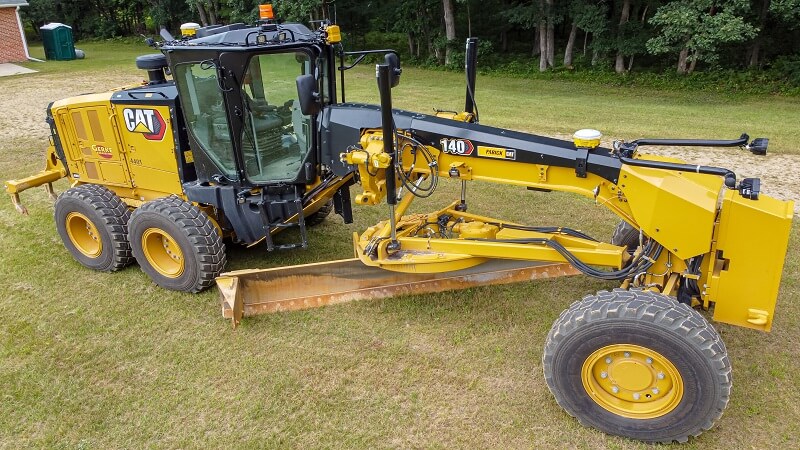
As of this day, graders are a must-have in the construction and civil engineering industries. With the main objective of leveling out uneven surfaces, graders shape the soil, making sure it’s ready for use, whether for building on top of it or laying asphalt or concrete.
But did you know that these machines have come a very long way from where they started out? In this blog, we’ll uncover how this machine came to be, starting from an attachment that was pulled by horses to the fully-fledged machine we have in our hands today.
What Even is a Grader?
To put it simply, a grader is a large, heavy machine that is specifically made to level out surfaces and shape the terrain, readying it for further construction. There are two main types of graders: the older pull graders and the newer motor graders.
Pull Graders
The first grader models were designed to be pulled by horses or oxen, with the earliest known example of this kind being created in 1885. After that, with the continuous development of steam engines, steam-powered tractors replaced animals in most agricultural and construction jobs by the early 20th century.
In such early models, the grader was towed behind the tractor and was used to get simple tasks done, like leveling soil in smaller areas. A few years later, with the introduction of internal combustion engines — which were cheaper, faster, and also lighter — more modern versions of the grader started to see the light, and we got to see the motor grader in a form that is almost similar to what we have today.
While they did the job back in the day, they’ve since fallen by the wayside in most major construction projects because, quite frankly, they’re just not very good at getting around.
Motor Graders
In these models, the grader part started being fitted to the middle part of the tractor to improve balance and control of the grader for higher efficiency. The first known motor grader, which was essentially a modified Allis-Chalmers tractor, was manufactured in 1920 by Russell Grader Manufacturing Company. With continued technological advancements, manufacturers started developing motor graders that are capable of performing various tasks, such as creating precise slopes and leveling out large areas of land. That is, of course, thanks to the powerful engines they were provided with and the ability to adjust that big blade in just about any way you need it to.
How Do Graders Even Work?
So, the basic idea behind graders is pretty straightforward, but it’s the ability of that blade to be controlled with such precision that really makes graders shine.
The Blade
The primary part of any grader – the adjustable blade is basically where all the magic happens. This blade is positioned between the front and back axles of the machine, giving the driver the ability to adjust its angle, height, and even rotation for it to be suitable for any kind of task it is needed for. Want to level a bit of land? No problem. Need to create a slope for drainage? Easy peasy.
Operator Control
Sitting up in the cabin, right above the blade to have full vision of the process, the operator controls both the machine and the grader, using a combination of hydraulics and controls.
to get the blade where it needs to be. Of course, modern motor graders these days can do most of the work for the operator, with the help of the advanced technology we have nowadays. Operators get features like self-leveling laser sensors, which means that the blade is always going to be in the right spot, getting the job done faster with higher efficiency.
Why Are Motor Graders Leading the Scene?
Motor graders have become the dominant choice for most construction projects. So, if you’re looking for graders for sale, here are some reasons why you shouldn’t be looking for pull graders, but for motor graders instead:
1- Increased Efficiency
Motor graders are self-propelled, allowing them to move around the construction site without requiring another vehicle for towing. This autonomy speeds up the work process and improves overall efficiency.
2- Versatility
Motor graders offer much greater flexibility compared to pull graders. Their ability to adjust the blade’s position, along with the introduction of GPS or laser-guided systems, has made them capable of performing precision tasks like road shaping, slope grading, and material spreading with incredible accuracy.
3- Advanced Technology
With the integration of modern technology such as self-leveling and GPS systems, motor graders are not only more powerful but also smarter. These systems ensure that the grader maintains its ideal blade position, reducing the need for constant human intervention and increasing accuracy on the job site.
For these reasons and some more, motor graders have become the preferred option for nearly every major construction project, from roadwork and earthmoving to large-scale land grading and drainage projects.
Key Features of Modern Graders
Motor graders are equipped with several key features that enhance their performance and make them an invaluable asset on construction sites. In addition to the precise adjustment of the blade, we have ergonomics and operator comfort.
Modern motor graders are designed with operator comfort in mind. The cabin is spacious, offering good visibility of the work area, and is equipped with user-friendly controls. Features like air conditioning, ergonomic seating, and intuitive controls ensure that the operator can work for long hours without fatigue.
Renowned Graders Manufacturers
When it comes to choosing a motor grader, brand reputation plays a significant role. At Makana.com, you can find a variety of the most popular brands and models, with worldwide shipping options. As for our list of the top graders manufacturers, it includes:
Caterpillar
Caterpillar is one of the most trusted names in the heavy machinery industry, and its motor graders are known for their durability, power, and advanced technology. Caterpillar offers a wide range of models, from compact graders to heavy-duty machines designed for large-scale construction projects.
Komatsu
Komatsu is another leading manufacturer, renowned for its innovation and reliability. Komatsu motor graders are known for their fuel efficiency and advanced control systems, making them a popular choice for contractors who require both performance and cost-effectiveness.
Sany
Sany’s motor graders are gaining traction due to their affordability and reliable performance. These graders are ideal for contractors looking for a cost-effective solution without sacrificing quality. With solid build quality and easy-to-use controls, Sany motor graders are an excellent option for medium-scale construction projects.