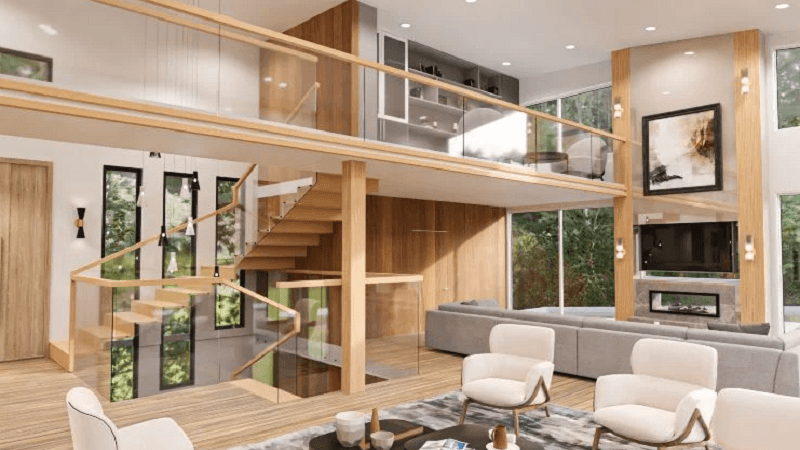
Choosing the right recessed lighting for your home can transform your space from ordinary to extraordinary. Whether you’re renovating your kitchen, updating your living room, or designing a new home, understanding the differences between recessed light sizes is crucial for achieving the perfect ambiance and functionality. Among the most popular options, 6-inch LED recessed lighting has emerged as a versatile middle-ground choice, but is it the right fit for your needs? In this comprehensive guide, we’ll explore the characteristics, advantages, and ideal applications of 4-inch, 6-inch, and 8-inch recessed lights to help you make an informed decision that illuminates your home beautifully and efficiently.
Key Highlights
-
4-inch recessed lights are ideal for accent lighting, small spaces, and areas requiring focused illumination with minimal ceiling penetration
-
6-inch recessed lights offer the most versatility, balancing light output with aesthetic appeal for general and task lighting in most residential applications
-
8-inch recessed lights provide maximum brightness and coverage, perfect for high ceilings, large rooms, and commercial spaces
-
Ceiling height plays a critical role in determining appropriate fixture size, with higher ceilings generally requiring larger fixtures
-
Spacing guidelines vary by size: 4-inch lights need 4-5 feet apart, 6-inch need 5-7 feet, and 8-inch need 6-8 feet for optimal coverage
-
Energy efficiency is achievable across all sizes with LED technology, though larger fixtures may consume more power for equivalent brightness
-
Installation considerations include ceiling depth requirements, with larger fixtures needing more clearance above the ceiling
Understanding Recessed Lighting Basics
Before diving into the specifics of each size, it’s important to understand what recessed lighting is and how it works. Recessed lights, also known as can lights, pot lights, or downlights, are light fixtures installed into hollow openings in the ceiling. When properly installed, they appear flush with the ceiling surface, creating a clean, streamlined look that doesn’t interrupt the visual flow of a room.
The size designation (4″, 6″, or 8″) refers to the diameter of the fixture’s trim or the opening in your ceiling. This measurement is the most visible aspect of the light and significantly impacts both the aesthetic appearance and functional performance of your lighting scheme.
4-Inch Recessed Lights: Compact and Focused
Characteristics and Performance
Four-inch recessed lights are the smallest of the three common residential sizes, offering a discreet lighting solution that minimizes visual impact on your ceiling. These compact fixtures typically accommodate bulbs ranging from 35 to 65 watts (for incandescent) or 7 to 13 watts (for LED equivalents).
The smaller aperture creates a more concentrated beam of light, making these fixtures excellent for directional lighting and highlighting specific areas or objects. The beam spread is typically narrower than larger fixtures, which can be advantageous or limiting depending on your lighting goals.
Advantages of 4-Inch Fixtures
The compact size of 4-inch recessed lights offers several distinct advantages. First, they require less ceiling depth for installation, making them ideal for homes with limited plenum space or where ceiling joists and other obstructions might make larger fixtures impractical. Most 4-inch fixtures need only 4-6 inches of clearance above the ceiling, compared to 6-8 inches for larger options.
These smaller fixtures also cost less, both in terms of the fixture itself and installation labor. If you’re working with a tight budget or need to install multiple lights, the savings can add up quickly.
Additionally, 4-inch lights create a more subtle aesthetic on your ceiling. When you need numerous fixtures for proper coverage, smaller lights can appear less obtrusive than a ceiling dotted with larger fixtures.
Ideal Applications
Four-inch recessed lights excel in specific applications where their compact size and focused beam are assets rather than limitations. They’re perfect for accent lighting, such as highlighting artwork, architectural features, or display shelves. The concentrated light draws attention to these focal points without washing out the entire room.
In smaller rooms like bathrooms, closets, hallways, and laundry rooms, 4-inch fixtures provide adequate illumination without overwhelming the space. They’re also excellent for task lighting in kitchens, particularly over countertops where focused light aids in food preparation.
Modern homes with lower ceilings (8 feet or less) often benefit from 4-inch fixtures, as the proportion between fixture size and ceiling height remains visually balanced. They’re also the preferred choice for shallow ceiling applications where larger fixtures simply won’t fit.
Limitations to Consider
While 4-inch recessed lights have many strengths, they also come with limitations. The smaller size means less light output per fixture, which often necessitates installing more lights to achieve adequate illumination levels. This can increase installation costs and create a “busy” look on your ceiling if not carefully planned.
The focused beam also means less ambient lighting and potentially more shadows in your space. For general room lighting, you’ll need to space these fixtures closer together than larger alternatives, typically about 4-5 feet apart, which again increases the number of fixtures required.
6-Inch Recessed Lights: The Versatile Workhorse
Characteristics and Performance
Six-inch recessed lights represent the most popular size in residential lighting, and for good reason. They strike an excellent balance between light output, visual presence, and installation requirements. These fixtures typically accommodate bulbs ranging from 65 to 100 watts (incandescent) or 13 to 20 watts (LED equivalents).
The 6-inch aperture provides a wider beam spread than 4-inch fixtures, offering better ambient lighting while still maintaining the ability to focus light when equipped with the appropriate trim and bulb combination. This versatility makes them suitable for almost any residential application.
Advantages of 6-Inch Fixtures
The primary advantage of 6-inch recessed lights is their versatility. They provide significantly more light output than 4-inch fixtures without the visual bulk of 8-inch alternatives. This makes them suitable for both general illumination and task lighting across a wide range of spaces.
The increased light output means you can achieve proper illumination with fewer fixtures compared to 4-inch lights. Spacing guidelines typically call for 6-inch fixtures to be placed 5-7 feet apart, depending on ceiling height and desired brightness levels. This reduced fixture count can actually make installation more cost-effective despite the slightly higher per-fixture cost.
Six-inch recessed lights also offer the widest variety of trim options, bulb types, and accessories. From adjustable gimbal trims for directional lighting to decorative trims for enhanced aesthetics, the 6-inch platform provides maximum flexibility in customizing your lighting design.
The moderate ceiling depth requirement (typically 6-7 inches) fits most standard residential construction without special accommodation. This makes installation straightforward in new construction and most retrofit applications.
Ideal Applications
Six-inch recessed lights are the go-to choice for general lighting in living rooms, bedrooms, dining rooms, and kitchens. Their balanced light distribution provides comfortable ambient lighting without creating harsh shadows or overly bright spots.
In kitchens, 6-inch fixtures excel at providing both general illumination and task lighting over islands, peninsulas, and countertops. The wider beam spread reduces the number of fixtures needed compared to 4-inch alternatives while still delivering focused light where it’s needed.
For standard 8-10 foot ceilings, which are common in most modern homes, 6-inch fixtures provide the optimal proportion of fixture size to ceiling height. They appear neither too small and ineffective nor too large and overwhelming.
These fixtures also work well in open-concept spaces where consistent lighting across multiple functional areas is important. The versatility of 6-inch lights allows you to maintain a uniform appearance while adjusting brightness levels and beam spreads to suit different zones.
Limitations to Consider
While 6-inch recessed lights are highly versatile, they’re not always the perfect choice. In very small spaces, they may appear oversized and can visually dominate the ceiling. Conversely, in very large rooms with high ceilings, they may not provide sufficient light output without installing numerous fixtures.
The middle-ground position also means they’re not optimal for very specific applications where either extreme focus (better achieved with 4-inch) or maximum brightness (better achieved with 8-inch) is required.
8-Inch Recessed Lights: Maximum Impact
Characteristics and Performance
Eight-inch recessed lights are the largest common residential option, though they’re also frequently used in commercial applications. These substantial fixtures can accommodate bulbs up to 150 watts (incandescent) or 25+ watts (LED equivalents), delivering significantly more light output than their smaller counterparts.
The large aperture creates a wide, diffused beam of light that provides excellent general illumination with minimal shadowing. The visual impact on the ceiling is substantial, making fixture placement and spacing critical to achieving an attractive result.
Advantages of 8-Inch Fixtures
The most obvious advantage of 8-inch recessed lights is their superior light output. A single 8-inch fixture can provide as much illumination as two or even three smaller fixtures, making them highly efficient for lighting large areas. This can actually reduce the total number of fixtures needed and potentially lower installation costs despite the higher per-fixture expense.
For rooms with high ceilings (10 feet or higher), 8-inch fixtures are often the most appropriate choice. The larger size maintains proper proportion with the ceiling height, and the increased light output ensures illumination reaches living spaces effectively despite the greater distance.
In commercial settings, large retail spaces, or homes with great rooms and open layouts, 8-inch fixtures provide the powerful, even illumination needed to make these spaces functional and welcoming. The wide beam spread minimizes dark spots and creates a bright, open atmosphere.
These larger fixtures also tend to have better heat dissipation due to their size, which can extend bulb life and improve overall system reliability, particularly important in hard-to-access locations.
Ideal Applications
Eight-inch recessed lights are ideal for rooms with ceilings 10 feet or higher, where their proportional size and light output match the scale of the space. Cathedral ceilings, vaulted ceilings, and two-story entryways all benefit from the substantial illumination these fixtures provide.
Large open spaces such as great rooms, bonus rooms, basements, and commercial areas require the powerful, widespread illumination that 8-inch fixtures deliver efficiently. Fewer fixtures can cover more area, simplifying the lighting design and reducing installation complexity.
For specialized applications like home theaters (where dimmable 8-inch fixtures can provide both bright general lighting and subtle ambient lighting), workshops, garages, and utility spaces where maximum brightness is valued over aesthetic subtlety, these larger fixtures are often the best choice.
In modern homes with industrial or minimalist design aesthetics, the bold statement of 8-inch recessed fixtures can actually enhance the architectural vision rather than detract from it.
Limitations to Consider
The primary limitation of 8-inch recessed lights is their substantial visual presence. On standard 8-9 foot ceilings, they can appear oversized and may dominate the ceiling plane in an unattractive way. Careful planning is essential to avoid a cluttered or overwhelming appearance.
These fixtures require the most ceiling depth for installation, typically 7-8 inches or more. This can be problematic in retrofit applications where ceiling depth is limited, or where conflicts with ductwork, wiring, or structural elements are more likely.
The higher light output, while generally advantageous, can create overly bright conditions if not properly controlled with dimmers or thoughtful fixture placement. In intimate spaces or rooms where softer lighting is desired, 8-inch fixtures may not be appropriate.
Cost is another consideration, as 8-inch fixtures and their associated bulbs typically cost more than smaller alternatives. However, this can be offset by the reduced number of fixtures needed.
Key Factors in Choosing the Right Size
Ceiling Height Considerations
Ceiling height is perhaps the single most important factor in determining appropriate recessed light size. As a general rule, fixture size should be proportional to ceiling height to maintain visual balance and ensure effective illumination.
For standard 8-foot ceilings, 4-inch or 6-inch fixtures are typically most appropriate. The 6-inch size often provides better light coverage with fewer fixtures, making it the popular choice for most applications.
For 9-10 foot ceilings, 6-inch fixtures are ideal, offering the right balance of proportion and performance. In some cases, such as over kitchen islands or in specific task lighting applications, 4-inch fixtures might still be used for accent purposes.
For ceilings 10 feet and higher, 6-inch fixtures can still work but may require more fixtures for adequate coverage. Eight-inch fixtures become increasingly appropriate as ceiling height increases, particularly above 11-12 feet, where they provide better proportion and more effective light distribution.
Room Size and Purpose
The size and function of the room significantly influence fixture selection. Small rooms like bathrooms, closets, and hallways generally work well with 4-inch or 6-inch fixtures. The limited square footage doesn’t require the light output of larger fixtures, and smaller lights maintain better proportion with the space.
Medium-sized rooms such as bedrooms, home offices, and dining rooms typically benefit from 6-inch fixtures, which provide comfortable general illumination without overwhelming the space visually.
Large rooms including great rooms, open-concept kitchens and living areas, and master suites may require 6-inch or 8-inch fixtures depending on ceiling height and desired brightness levels. The larger the space, the more important it becomes to consider light output per fixture to minimize the total fixture count.
Room purpose also matters significantly. Task-oriented spaces like kitchens and workshops may benefit from brighter, more focused light that might require different sizing than ambient spaces like bedrooms or living rooms.
Spacing Guidelines
Proper spacing ensures even light distribution without dark spots or overly bright areas. While specific spacing depends on many factors including beam angle, lumen output, and ceiling height, general guidelines provide a useful starting point.
For 4-inch recessed lights, plan for spacing of approximately 4-5 feet between fixtures. The focused beam requires closer placement to avoid shadows and dark spots. As a rule of thumb, space these fixtures no more than half the ceiling height apart.
Six-inch recessed lights typically work well with 5-7 feet of spacing, though this can vary based on the specific application. For general lighting in a room with 8-foot ceilings, 6-foot spacing often provides even, comfortable illumination.
Eight-inch fixtures can be spaced 6-8 feet apart, with the wider beam spread covering more area per fixture. In rooms with very high ceilings, spacing may need to be slightly reduced to ensure adequate light reaches lower levels.
The perimeter rule also applies across all sizes: place the first fixture approximately half the inter-fixture distance from the wall to avoid shadows along walls and ensure even coverage throughout the space.
Energy Efficiency and Operating Costs
Modern LED technology has largely equalized energy efficiency across all recessed light sizes, as the efficiency depends more on the quality of the LED components than the fixture size itself. However, larger fixtures that produce more lumens will naturally consume more energy than smaller fixtures producing fewer lumens.
The key consideration is total system efficiency. While an 8-inch fixture might use more energy than a 6-inch fixture, if one 8-inch light can replace two 6-inch lights, the total system energy consumption may actually be lower. This is because you’re running fewer fixtures overall, eliminating the cumulative energy loss from multiple ballasts or drivers.
LED technology has made all sizes viable from an energy perspective, but it’s worth calculating the total wattage for your entire lighting plan rather than focusing solely on individual fixture consumption. Consider factors like required brightness levels (measured in lumens), the number of fixtures needed to achieve that brightness, and the runtime of lights in different areas of your home.
Dimming capability can significantly impact operating costs regardless of fixture size. LED-compatible dimmers allow you to adjust light levels to match needs and preferences, reducing energy consumption when full brightness isn’t necessary.
Aesthetic Considerations
Beyond functionality, recessed lighting is a design element that impacts your home’s visual appeal. The size you choose affects the overall look and feel of your space in ways that go beyond simple illumination.
Smaller 4-inch fixtures create a more subtle, minimalist appearance that can enhance modern or contemporary design schemes. They’re less visually intrusive, allowing other design elements to take center stage.
Six-inch fixtures strike a balance between presence and discretion. They’re substantial enough to make a design statement when desired but not so large that they overpower other elements. This versatility makes them suitable for most design styles from traditional to contemporary.
Eight-inch fixtures make a bold statement that works well in industrial, modern, or commercial-inspired designs. In the right context, their substantial presence can enhance the architectural character of a space. However, in more traditional or delicate design schemes, they may appear too heavy or industrial.
Consider also the trim style, which can significantly impact appearance. Larger fixtures offer more opportunities for decorative trims, colored finishes, or architectural details that become part of the overall design scheme.
Installation Requirements
The physical installation requirements vary by fixture size and can impact both feasibility and cost. All recessed lights require depth above the ceiling (plenum space), but the amount varies by size.
Four-inch fixtures typically need 4-6 inches of clearance, making them the easiest to install in tight spaces or retrofit applications. They’re more likely to fit between ceiling joists (typically 16 inches on center) without requiring structural modifications.
Six-inch fixtures generally need 6-7 inches of clearance and may require strategic placement to avoid joists or can be installed with remodel housings designed to fit from below without attic access.
Eight-inch fixtures need 7-8 inches or more of clearance and are most likely to encounter conflicts with structural elements, ductwork, or other building systems. Professional installation is often recommended for these larger fixtures to navigate these challenges properly.
New construction offers the most flexibility for any size, as fixtures can be planned around structural elements. Retrofit installations may limit your options based on existing conditions, though modern remodel housings have greatly expanded retrofit possibilities for all sizes.
Making Your Decision: A Practical Framework
Assessing Your Needs
Start by carefully evaluating your specific requirements. Measure your ceiling height in the room(s) where you plan to install recessed lighting. This single factor will eliminate some options and point you toward others.
Consider the room’s purpose and how you’ll use the space. A home theater needs different lighting than a kitchen, which has different needs than a bedroom. Task lighting requirements, ambient lighting preferences, and special features like dimmers or color-changing capabilities should all factor into your decision.
Evaluate your existing ceiling structure if you’re doing a retrofit project. Access to the attic or space above the ceiling, the presence of insulation, and the routing of existing ductwork and wiring may all influence which size is most practical to install.
Budget is also a practical consideration. Calculate not just the cost of fixtures but also installation labor (if hiring professionals), electrical work, and any ceiling repairs or modifications needed. Sometimes the “best” size from a performance standpoint isn’t the best choice when practical constraints are considered.
Consulting the Professionals
While this guide provides comprehensive information to help you make an informed decision, there’s no substitute for professional expertise when it comes to final planning and installation. Licensed electricians and lighting designers bring valuable experience that can help you avoid costly mistakes and achieve optimal results.
A lighting designer can create a comprehensive lighting plan that considers all aspects of your space, from architectural features to furniture placement, ensuring your recessed lighting works harmoniously with other light sources and design elements.
Electricians can assess your existing electrical system, determine if upgrades are needed to support your lighting plan, and ensure all work meets local building codes. They can also identify potential installation challenges early in the planning process, saving time and money.
Don’t hesitate to get multiple opinions and quotes. Different professionals may suggest different approaches based on their experience and expertise, giving you a broader perspective from which to make your final decision.
Conclusion
Choosing between 4-inch, 6-inch, and 8-inch recessed lights doesn’t have to be overwhelming. By understanding the characteristics, advantages, and ideal applications of each size, you can make a confident decision that enhances your home’s functionality and aesthetics.
Four-inch recessed lights excel in small spaces, accent applications, and situations where minimal ceiling penetration is important. Their focused beam and compact size make them ideal for targeted lighting solutions.
Six-inch recessed lights offer the versatility to handle most residential lighting needs, from general illumination to task lighting. Their balanced performance and wide range of available options make them the default choice for many homeowners and designers.
Eight-inch recessed lights provide maximum light output and work best in large spaces, high-ceiling applications, and situations where powerful, even illumination is the priority.
The right choice for your home depends on your specific circumstances: ceiling height, room size, intended use, aesthetic preferences, and practical constraints. By carefully considering these factors and perhaps consulting with lighting professionals, you can create a lighting scheme that illuminates your home beautifully and efficiently for years to come.
Remember that recessed lighting is just one component of a comprehensive lighting design. Combining recessed lights of appropriate size with other lighting types—including pendant lights, wall sconces, and table lamps—creates layered lighting that’s both functional and inviting. Whatever size you choose, quality LED fixtures will provide energy-efficient, long-lasting illumination that transforms your space and enhances your daily life.